Reading the Room: How Finish Line's Kitchen Cooks to the Score in Real Time
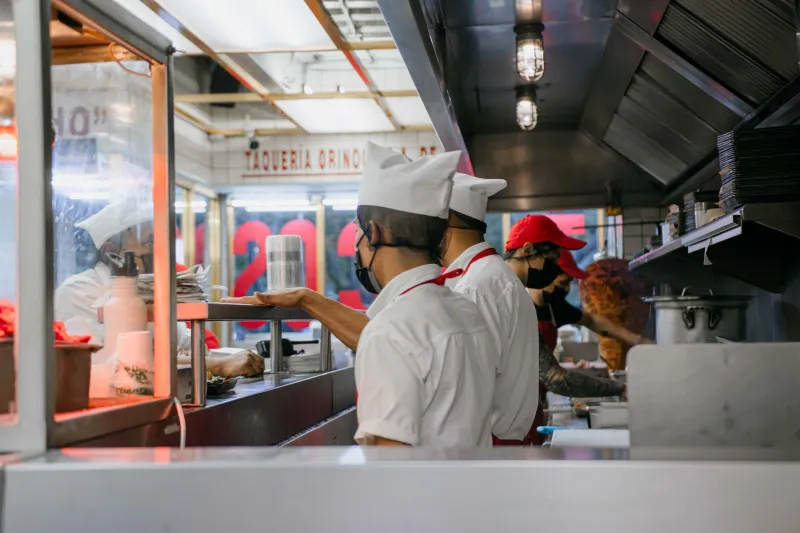
The ticket printer at Finish Line Sports Grill doesn't tell the whole story.
Yes, it spits out orders. Yes, the kitchen fills them. But ask anyone who's worked a big game night on the line and they'll tell you there's a whole layer of information that never touches the paper — the crowd noise coming through the wall, the rhythm of when orders stop, the specific kind of silence that falls over a sports bar when a game goes sideways.
The kitchen feels all of it. And at Finish Line, they've gotten very good at using it.
The Pulse Beneath the Orders
Chef Danny has run the Finish Line kitchen through enough playoff seasons to know that game-day cooking isn't just execution — it's anticipation. "You can't just wait for the ticket," he says, leaning against the prep station during a rare quiet moment before a Sunday kickoff. "By the time the ticket prints, you're already behind. You have to read where the game is going and get ahead of it."
What does "reading the game" actually look like from inside a kitchen with no line of sight to the dining room? It's a combination of instinct, pattern recognition, and surprisingly granular data.
Finish Line tracks order volume in real time against game clocks and scoring events. Over years of doing this, clear patterns have emerged — patterns that now inform how the kitchen stages its prep work, how much of each item gets held warm, and when to expect the next wave before it arrives.
"There's a moment about four minutes before halftime where the entire dining room basically decides what they're ordering next," says sous chef Keisha. "We don't see the decision. But we feel it. The tickets start coming in waves about ninety seconds later, and if you're not ready for that wave, you're toast."
What Momentum Shifts Actually Look Like in the Data
Here's something that might surprise you: the biggest order spikes at Finish Line don't happen during touchdowns or home runs. They happen about two minutes after a momentum shift — when the crowd has processed what just happened and reached for their phones to order something.
A team goes up by ten in the third quarter: the room exhales, people lean back, and within two minutes the kitchen sees a wave of celebratory orders. Shareable plates. Another round of wings. Items people order when they're relaxed and feeling good.
A team gives up a go-ahead score in the fourth: the room tightens, people lean forward, and about ninety seconds later a different kind of order starts coming through. Simpler things. Comfort items. Individual orders rather than shareable ones — because when people are anxious, they pull inward.
"Losing crowds order alone," Danny observes. "Winning crowds order together. You can feel the shift in how the tickets are grouped."
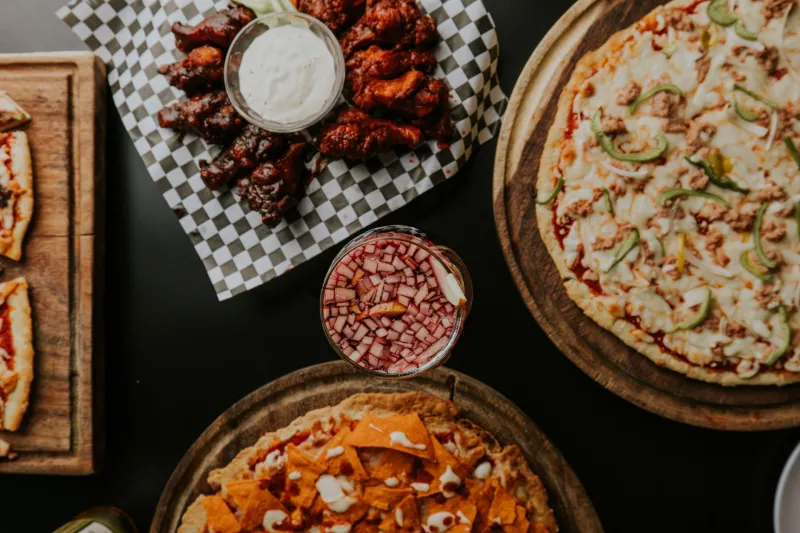
This distinction has real operational implications. When the kitchen senses a confident crowd, they start staging shareable items — nacho towers, wing platters, the Onion Ring Tower that requires a few extra seconds of plating. When the energy drops, they shift toward faster, individual-portion items that can move quickly to a room that needs something solid to hold onto.
The Art of the Pre-Emptive Cook
One of the most counterintuitive things about Finish Line's kitchen strategy is how much they cook before anyone orders it.
At the start of a game, the kitchen stages based on a read of the crowd and the matchup. A rivalry game with a packed house gets a heavier upfront prep on wings and loaded apps — things that move fast and in volume. A weeknight game with a smaller crowd gets a lighter initial stage and more flexibility built in.
"You're basically making a bet at the start of the night," Keisha explains. "You're saying, 'Here's what I think this crowd is going to want, and here's when I think they're going to want it.' Sometimes you're wrong. But if you've been doing this long enough, you're right more than you're wrong."
The bet isn't just about quantity — it's about timing. A dish that takes twelve minutes to fire can't wait for a ticket if it's needed at halftime. The kitchen has to start it before the order exists, trusting the pattern to validate the decision.
When it works, it looks seamless. Food arrives fast, the room stays fed, nobody notices the operational precision underneath. When it doesn't — when a game goes to an unexpected blowout or a crowd that was supposed to be electric turns quiet — the kitchen pivots, adjusts the stage, and absorbs the shift without the dining room feeling it.
Feeding Confidence vs. Feeding Desperation
There's a meaningful difference between what a confident crowd eats and what a desperate crowd eats, and it goes deeper than just the items on the ticket.
Confident crowds eat slowly. They're savoring. They're present. A plate of nachos gets grazed over the course of a quarter. People refill drinks at their own pace. The kitchen can spread its output because the room isn't in a hurry.
Desperate crowds eat in bursts. Between plays. During timeouts. They're not tasting — they're stress-processing. Orders come in clusters, get consumed fast, and the table goes quiet again when the action resumes. The kitchen has to match that rhythm: fast tickets, fast output, nothing that requires extended attention at the table.
"Comfort food during a tough game isn't about the food," Danny says. "It's about having something to do with your hands that isn't biting your nails. We're providing an outlet. We take that seriously."
The Last Five Minutes
If the kitchen has a white-whale moment, it's the last five minutes of a one-score game. Orders essentially stop. The dining room is locked in, barely breathing. Even the bar slows down.
The kitchen uses it. "That's our reset window," Keisha says. "We're cleaning, restaging, getting ready for whatever comes next — either a celebration wave or a quiet, slow exit. Both require something from us. We just don't know which one yet."
When the final whistle blows, they find out. And within sixty seconds, the tickets tell the rest of the story.
At Finish Line, the scoreboard isn't just on the screens. It's in the rhythm of the kitchen, the tempo of the tickets, and the unspoken conversation between a crew that's learned to cook not just for the crowd — but with it.